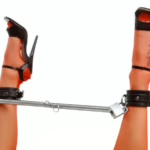

Spreader bars have a name that sounds more alarming than the object itself. The name conjures images of something complicated and serious. The reality is a rigid bar with cuffs at each end, designed to keep wrists or ankles a fixed distance apart. That is genuinely the whole thing.
They are popular in bondage and restraint play for several practical reasons – they are simple, they work reliably, they do not require any particular skill to use, and they give the person wearing them a very specific sensation of controlled immobility without actually being particularly restrictive. You can stand, lie down, sit. You just cannot bring your limbs together. Which, depending on the context, is exactly the point.
What Is a Spreader Bar?
A spreader bar is a rigid implement – typically made from metal, wood, or a rigid polymer – with attachment points at each end. Those attachment points connect to cuffs, loops, or clips that fasten around wrists, ankles, or both.
The effect is positional rather than restrictive in the traditional sense. Unlike rope or handcuffs, a spreader bar keeps limbs apart rather than just together. This creates a specific vulnerability that many people find appealing from either end of the dynamic.
Lengths vary. Ankle spreader bars tend to be longer – typically 45-60cm – to create a meaningful stance. Wrist spreader bars are shorter. Some are adjustable, which is useful if you are not sure what length suits you or if you plan to use the same bar for different positions.
Is This Beginner Territory?
More so than people assume. Spreader bars sit at the more accessible end of restraint equipment because they do not require knot-tying skills, they are easy to remove quickly if needed, and the level of restriction is immediately obvious rather than something that creeps up on you.
The main things a beginner needs to understand are safe words, the importance of checking in with their partner during use, and not leaving someone in a fixed position for longer than is comfortable. None of these are complicated.
If you have never tried any restraint play before, a spreader bar is a reasonable starting point. Less intimidating than elaborate rope bondage, more interesting than simply holding someone down.
What Should You Look For When Buying?
Material matters more than people realise. Metal bars are heavy and cold, which some people enjoy and others find uncomfortable. Wooden bars are lighter and warmer. Rigid polymer bars split the difference – lighter than metal, firmer than some might expect.
The cuffs are where most of the comfort consideration sits. Padded cuffs are significantly more comfortable for extended wear. Unpadded metal cuffs can dig in and become genuinely unpleasant quickly. If there is any chance of extended use, pay for padded cuffs.
Adjustability: fixed-length bars are fine if you know what you want. Adjustable bars are more versatile and worth the slight additional cost if you are buying your first one.
Quick-release mechanisms: some cuffs have a quick-release clip in addition to the standard fastening. For beginners especially, this is worth having. If anything feels wrong or uncomfortable and someone wants to stop immediately, fumbling with a conventional buckle under pressure is not ideal.
Safe Words – Every Time
This gets repeated in every piece of writing about restraint play because it bears repeating every time. Agree on a safe word before you start. Use the traffic light system if you are not sure what to choose – green for continue, amber for slow down or check in, red for stop completely.
The safe word is not a sign of inexperience or excessive caution. It is basic communication. It also removes ambiguity entirely, which is good for everyone involved.
Positions and Practical Considerations
Ankle spreaders are typically used with the person lying on their back or front, or kneeling. The bar prevents the ankles from coming together, which affects positioning and creates a specific kind of vulnerability depending on the dynamic you are going for.
Wrist spreaders can be used with arms held out in front, above the head, or behind the back – though behind the back requires more care as shoulder strain is possible if the position is held for too long.
A spreader bar connecting both wrists and ankles simultaneously – sometimes called a hog tie bar – is a more advanced configuration and not recommended as a starting point. Get comfortable with a single bar first.
Check in regularly during use. Ask if the person wearing the bar is comfortable. Numbness, tingling, or significant discomfort in the limbs means the position needs to change or the bar needs to come off. These are not dramatic scenarios – they are just the normal practicalities of keeping someone comfortable while also keeping them in an interesting position.
Aftercare
The same principle applies here as to any restraint play. After the session, check in with your partner. Some people feel emotionally wobbly after intense experiences, even ones they enjoyed. A bit of warmth, reassurance, and general human decency goes a long way. It does not need to be elaborate. It just needs to happen.
Cleaning and Storage
Metal and polymer bars: wipe down with a damp cloth and a mild cleaner. Padded cuffs: check the manufacturer guidance – most can be wiped down but some have fabric elements that need more care. Store flat or hanging rather than stacked under other equipment.
If cuffs are shared between partners, cleaning between uses is not optional. Body-safe materials and proper cleaning are the same basic standards that apply to any intimate equipment.
Browse our range of spreader bars and bondage equipment at The Loving Company. Clear descriptions, body-safe materials, discreet packaging, and your postman remains entirely in the dark about your Thursday evening plans.